Pages

Showing posts with label injury prevention. Show all posts

Tuesday, February 3, 2015

Almost Hansons. Almost.

While I was out with an injury, I read running books voraciously, mostly with an eye to finding a plan that would facilitate my stepping up from a plan where the goal was to finish the half upright, to beginning to race it.  More mileage, but something that's sensitive to a beginning runner's lack of speed.

I started with Hansons Half Marathon Method, which is a version of their popular marathon training program aimed at the half.  The first part of the book explains their training philosophy, which centers on running, running, and more running, because they argue that the non-cardio benefits of running are what really improve a runner in the long run.  Hansons marathon plan became known as the plan that demanded only a 16 mile long run, but what the buzz failed to mention is that the long run topped out at 16 because all of the rest of the mileage comes during the week.

They build their training program on the principle of cumulative fatigue; throughout the training cycle, the runner's legs will always be tired and never fully rested, which will not only simulate the last leg of the race, but also ensures that the runner has to take the easy days easy.  It's hard to race your training accidentally if your legs are always a little heavy.

I liked a lot about the plan.  The "Beginner" plan, aimed at beginning racers at the distance, tops out at 48 miles a week, which would be a challenge.  Every run is planned, with intervals and tempo runs included every week.  Best, the book includes all of the pace charts that you could wish for to get you through training, and it's extremely well-organized and edited.

Here's the problem.  I want to do this plan so badly, but I don't think I can handle six days a week of running.  I know I can manage five without an injury.  Every time I've pushed it to six, the sixth run of the week is horrible and I wind up hurting.

I want to destroy my half marathon, but I also want to keep from losing hours a week to PT.    So this cycle I'm sticking to three principles:

  1. Run no more than five days per week.
  2. Off days are off.  No weight training or extra core work.
  3. Mobility work every day on hotspots.


So I've shelved Hansons for now.  Maybe next time.

Friday, January 30, 2015

Saucony Omni 12.

So, the month and a half off.  I had just managed to get my SI joint under control, and I went out too aggressively at a cold Thanksgiving 5K, and followed it up with a long trail run, and then gardening, and my left thigh, hip flexor, abductors, adductors, groin, everything, just told me NOPE NOPE NOPE NOPE, and that was it.

I limped.  I read Kelly Starrett's Ready to Run and Jay Dicharry's Anatomy for Runners, and both are full of helpful tips for the injury-prone runner, some of which I adopted, and some of which I'll take with a grain of salt, as you'll see,

I'm feeling better now, but minimal cross-training, some lingering stiffness, and Christmas has set me back.

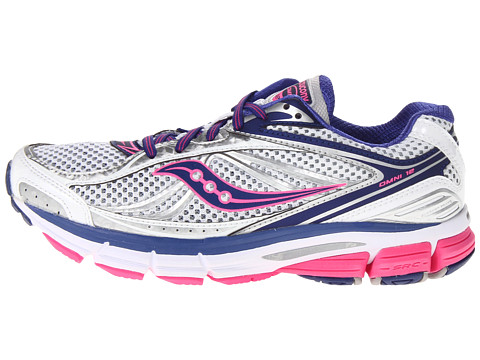
Nevertheless, this week starts the training program, and a few weeks back I picked up a pair of Saucony Omni 12s on clearance.  This is a monster of a stability shoe, but it has several features I like a lot.

First, they're a sharp-looking shoe. Not the most important feature, but still -- they look good.
Mine are in the teal colorway, but with 50 miles on them including one very muddy trail run, they're not quite as pretty as the stock photo!

Saucony a while back decided that all of their main shoes would be 8mm drop, and I really like this feature.  It is noticeable compared to my other standby, the ASICS Kayano, which has a ~13mm drop, but it doesn't feel wrong; I just notice my calf muscles working a bit more.  That's good, for me, because a lower drop means my hip has to do a bit less work to stabilize my foot. 

The heel doesn't flare much at all, which I also appreciate.  It feels sleeker.

The feature I really appreciate, however, is this:
The shoe is very straight, and the last is very stable.  After a decent amount of trial and error, I've figured out that one of my problems is that due to bunions, I have very little ability to stabilize my left foot with my toes, so a softer shoe, or one that curves leaves me with little leverage.

Now, straight lasts mean heavy motion control shoes, right?  Here's the thing -- the Omnis are really light, and their ride reminds me of their Mirage, which I love (except for its durability.)  So, it's a good shoe, I think, for someone like me who likes the idea of a more minimal shoe with a lower offset but doesn't yet have the strength to pull it off.

And that gets me to my last point.  Starrett recommends flat shoes for runners, and working toward them.  I'd wear a flat shoe if there was a stability model, but there's not, and while I completely believe that the right thing to do is work on my hip stability, the thing is, my poor hip needs all the help it can get.  Sometimes I think minimalist movement forgets that the shoe is supposed to fit the runner, not the other way around, and that the shoe is one tool the runner has among many.

The Omni rides a bit firm.  I prefer this -- it's easier for me to control a firmer shoe -- but I also suspect that it's designed for a heavier runner (which makes sense, given the demographics on who is likely to need a motion control shoe.)  I don't feel like I sink into the cushioning at all, and it rides high.  

Mostly, though, I'm just happy to finish a longer run without my hip instantly clenching, and these shoes just may be a winner....


Tuesday, December 2, 2014

Seriously?

Throughout September and October I faithfully went to PT, and after nearly two months of PT on my SI joint (did you know your pubic bone can dislocate?  it can!), I had no piriformis pain that couldn't be massaged out, and I was off and running, both figuratively and literally.

I'd put together a maintenance routine for myself, using advice from Ready to Run and the famous MYRTL routine, to keep everything limber and fluid.  I put blue Superfeet in my Kayanos.  I warmed up before my runs in the dark, during which I wore a headlamp and the most brilliant reflective shell for safety.  I increased gently to 30 miles a week.  Something flu-like knocked me out for a week, but I figured I'd use the time off to rest, and I still managed ~93 miles in November.

And two weeks ago I felt a twinge.  A slightly tight thigh.  Okay, so I rumbled into action.  Foam rolling.  The stick.  Mobility upstream and downstream. Couch stretches.  Smash!  Floss! Epsom salt soak.  Good to go!  Ran up some trails.  Ran gently and easily in the morning.  Noticed my pace was dropping off but figured it was due to the mileage increase.

Then I ran a Turkey Trot.  The local hospital joins with several local charities to produce this fun low-key race that covers the hills in the nearby neighborhood.  Entry is a donation to charity, and the timing is just a man with a watch who tells you your time as you cross.  It's charming, and there was also a two-mile walk, so the husband and the toddler got in some quality stroller time while I ran.

I was feeling a little tight so I just decided to pace it, hoping to come in under 45 for five miles.  The race stopped at 4.65 miles by my Garmin, and I finished in  41:35.  As the man running next to me quipped, that's one PR that will stand for a while.  I was happy to run relatively even splits.

I kept running, and then Sunday did an achingly tight 5 miler, then yardwork, and now I'm limping.   My guess is that it's my hip flexor.

Sometimes this sport is really annoying.


Monday, September 22, 2014

So, it's been a while

Six days until the race!  I've been wildly busy with work and life, and once I added physiotherapy for my creaky SI joint, I've had no time to blog.

Fortunately, I have basically negative two readers at this point, but for you, I apologize for keeping you hanging.

Training has been going well.  I never thought eight miles would feel like an easy, relaxing run, but nevertheless, there it is.  

Rehab's been interesting.  The problem is that my lower core is weak, despite my efforts, and my left hip rotates forward, and then my tailbone pulls out of alignment.  This makes everything hurt, and screws up my stride.

So, part of the work is for the nice physiotherapists to pop my hip back into place.  Today, that involved also realigning the symphysis pubis joint, which cracked painfully and loudly, like a bunch of firecrackers went off in my pants.    I saw stars, and then yelled, and then apologized.  But then, when I stood up, I felt lighter and straight.

This is apparently what normal feels like.

The rest of the work is retraining the glutes and core so they can stabilize my pelvis when I run.  Lots of marching bridges and variations on leg lifts, and lots of getting my tired hamstrings to stretch just a bit further.

I think it's helping, but I also think it will be a while coming back.  The PT says essentially we have to retrain my body to recognize normal as normal, instead of settling back into the misalignment that I've had for months.

The race is Saturday!

Wednesday, September 3, 2014

And the winner is....

... the SI joint.

So, I missed my long run this weekend.  My back was tight and spasming whenever I tried to bend over and after sitting for long periods, so ten miles wasn't going to happen.

I treated myself to new shoes!  Asics Gel-Kayano 19, for $50!  These are a stability shoe.  I'm trying something new.  I noticed that my Nikes had creases on the medial midsole, and so I think they have worn out.  If I am overpronating, which I think I might be based on the depth of the creases, while I may have high arches, I'm probably need the support.  I don't need a squishy feeling in my shoes, so I can run on a firmer surface.  It's worth a shot.

(Reasons to support your local running store:  end-of-season clearance sales.)

So, eventually, there will be a new review coming your way.

I began to feel better with a bit of rest, and so Monday I went out for an easy four miles with a friend.  Running along the river parkway was nice, and flat and stable.  My back and left glute were tight, but didn't seem to get any worse.

Tuesday I did six miles on the treadmill.  The only real problem with this is that my mental treadmill limit is about forty minutes, so it took a lot of Sportscenter on the TVs to get me through those last fifteen minutes.  I start mentally subdividing the tenths of miles into seconds.

So far, the new shoes are working out well.

And then in the evening I was off to the sports doc.  He treated my shoulder when I separated it a couple of years ago, and his first recommendation is almost always PT, which I appreciate.  Anyhow, after some fun confusing the newbie resident -- I'm flexible so it's hard to generate symptoms -- the doc determined that my pelvis is rotated on my left side, which is stressing the piriformis muscle.

It's about what I expected, given the location of the pain and my inability to stretch it out.  I'm just glad that there seems to be no disc involvement.  His guess is that the instability originates from having the baby, and that running has basically stressed it enough that my back clenched up.

I told the kid it was his fault, but he just grinned and tried to feed me goldfish crackers.  Toddlers.

I'm fine to keep running if I want.  The plan is more 'mill tomorrow, then an easy four Friday, and then thirteen on Saturday, and then I will be the happiest newbie that ever tapered.  PT starts Monday, and I'm hoping they can sort this out.  Once the race is done I have to rebalance lifting and running  -- because it's curious that as soon as I cut back on strength training, a nagging pain became a huge pain in the rear.

Literally.


Friday, August 29, 2014

Setback.

Last night I headed out after dinner for a quick four or five mile run.  This week's training has been going swimmingly.  I've knocked out the mileage, held good easy paces, and even had a nice run with a friend on Wednesday.

Those whom the gods would destroy, they first give a good week of running.

It was a warm night but nothing too uncomfortable, the route one I've run fifty times before, and the sun was just beginning to sink below the horizon.  I'm not great at running after a full meal, and so I kept the pace slow and even, just trying to get the miles in before today's rest and Saturday's ten miler.

Four miles into the run, my right lower back, which had been tight but not worrisome all day, began to get tighter, and tighter, and tighter.  I had to stop.  I walked the half mile home, where I realized something was not right.

None of the usual suspects hurt.  Right foot & ankle, fine.  Left hip-and-glute-posterior-chain-of-doom, fine.  But my lower back hurts, and while I'm fine if I'm standing or walking tall, sitting hurts, and bending or leaning over and straightening up is next to impossible.

There is no way I'm running this weekend.  I'm pretty confident that if I were to do nothing the rest of the month, I could finish my half, which is my first goal of course, but if I aggravate this I'll miss it completely.

Kind of bummed.  Trying not to cope by eating all the M&Ms.  And I have a doctor's appointment for Tuesday.

Monday, August 4, 2014

Back to the bar!

The last two weeks I've slacked off on strength training because after the trails caught on fire and I missed my long run, I felt like I should take the run options in my training plan instead of crosstraining.

Yeah, enough of that.  I think right now I do a bit better if I run four days a week and strengthen train for two, keeping one day as a rest/yoga day.  

So today I hit the gym with some friends for a leisurely weights workout, by which I mean Coach taught us some new ways to be completely exhausted by the end of it.

First up, the Turkish get-up.  


(That's not me.  This is Neghar Fonooni, who is evidently a badass.)


 Second, the push press. A push press is a regular overhead press, but instead of standing still and beginning the press with your arms, you bend your knees slightly and then explode up, transferring the force from your legs to your arms, and then you press it up.  The idea is to use your legs to power the weight above your head -- it makes the press significantly easier.

Once that was done, it was onto maxing the squats.  110lbs for me!  It was a soft 110, but I didn't really want to push it as my IT band is a bit achy after last week's adventures.  We closed out the day with some push-ups, dips, and split squats, and some well-deserved stretching.

Not sure what to make of this set of lifting standards, but it's interesting.  I'm solidly in the novice-intermediate range on all of the lifts that I've done.  Maybe I've got the wrong sport prioritized as I'm clearly in the turtle range on distance running...!

Who else here strength trains?


Thursday, July 31, 2014

Protip: Don't faceplant!

I'm feeling much better after Tuesday's adventure.  My chin is still swollen and my jaw is still tender at the right TMJ, but it's getting better.  Yesterday I went for a walk and took it easy.  The schedule called for cross-training or a rest day, but I figured that my body had enough going on trying to repair my face that I didn't need to stress it.

So, first rule of injury prevention: don't fall down.

Second rule:  your hips are weak.

But I run fast, you say.  But I am healthy, you say!  But I've been doing this longer than you have, emmbee, you say!

That is true.

Still, your hips are weak.  Especially if you're female, and especially if you've had a baby.

I'm a new runner, but I'm an old pro at starting running programs and giving up due to knee and IT band pain.  I knew my feet were flexible, and that I overpronated moderately, so I bought motion control shoes, and, well, I still had pain.

Then I had a baby who liked to eat, and I spent many hours nursing and reading books about running on my Kindle.  And I learned that many of the aches and pains of runners can be attributed to weak hips.

Here's the deal.  When you run, you take about 3000 steps per mile, give or take.  Your body is a marvelous machine, so imagine any other machine you like.  A bicycle, maybe, or a stand mixer.  Now imagine a tiny problem with its mechanics -- maybe a slightly wobbly tire, or one tooth on a gear slightly out of position.  How would it last after 15,000 repetitions?

Why would your body be any different?

Now, this is not all to say that we need to have the same form.  Your personal history and movement patterns are stamped on your body.  But if something small is out of balance, it can lead to greater problems down the line.

Think about your hips and glutes.  If they're not strong, or if they're not firing, when you stride forward powerfully, as you do when you run, your leg will cave in slightly.   Assuming you don't fall down (see protip #1), some other muscle and joint has to compensate to absorb the force.  That means that your foot rolls in more, and your quad and IT band have to tighten to catch you.  Do that 15,000 times, and you stand a good chance of injury.

Often, it's not a matter of pure strength.  If you want the easiest, no brainer fix, just find a trainer and learn how to squat and deadlift.  Once you can do those, you'll have sorted out your hip and glute issues.  But you might not be into cross-training, nor might you have time or access for a gym, and the thing is, there is no savings account in strength training.  You have to work these muscles all the time.

So, what to do?

There are so many things, but here's what I like as a starting point:

  1. Stand tall.  (If you do yoga, think of mountain pose.)  Stand with your weight equally balanced on your feet, with a neutral pelvis, tail neither tucked nor popped.  Your weight should be over your heels; check this by wiggling your toes off the ground.
  2. Now, think of rotating your knees outward from the hips.  You won't actually move your knees --- you're just trying to find that little stabilizing muscle.*  What you're thinking of is moving your glutes (buttcheeks) together without clenching them, rotating your femurs outward without moving your feet.  
  3. Now, notice what it does.  Pay attention to your body!  You'll notice that your knees separate a bit, and your legs are straighter.  Your arches will lift slightly.  
This is what you need to get your body to do while you run.  Obviously, you're not going to be able to concentrate on that, so you do strengthening exercises to get those muscles to fire.

Here's my three favorite hip strengtheners.  
  • Air squats.  Standing tall, squat down to parallel or just below, and then stand back up.  Here's what you need to think about while doing this:
    • Remember that little stabilizing muscle in your butt?  Think about it.  Feel it push your knees outward as you squat and rise.  You want to keep your knees from collapsing in, and you want that to happen from your butt.
    • Power yourself back up with your glutes -- you want to avoid tipping forward.  Keep your weight over your heels as much as you can.
    • I like to do these after runs, maybe 20 or so.
  • Monster walks.  For this one, you need one of those stretchy elastic flat bands.  Loop the band around both legs, around your calves or ankles.  Stand with your feet about hip width and bend your knees into a high squat.  Then, keeping tension in the band, step sideways.  
    • Do ten steps in one direction, and then come back ten steps the other way.  You'll feel this in your hip rotators, too.
    • Three sets of ten should do ya.
  • Roll-outs.  For this one, you need that flat band again, a soccer-ball sized rubber ball (like the kind your kids want at the supermarket), and a chair or a stability ball.
    • The band goes around your legs just above the knee.  Your butt sits on the big ball.  The little ball goes between your knees, feet about hip width apart.  Keep your hands on the little ball.
    • Think about that little stabilizing muscle, and feel it work as you roll your feet to the outside -- your legs will part, and you'll feel the band stretch.  Then, return your feet to neutral, and squeeze the little ball between your legs.  You're basically doing a clam shell, but while sitting, with a little added resistance.
    • Three sets of eight should be good.  If you Kegel as you squeeze the ball, and lift your pelvic floor, you'll get a good workout there, too.  (Important for us mother runners.)
And you're on your way!  Bulletproof.  Just don't fall on your face.

* Technically, it's all these little muscles.  But they're hard to tell apart, and you're looking for a feeling of rotation.

(Standard sort of disclaimer:  I'm not a medical doctor, just a hobbyist, so think critically when deciding whether to listen to some loon on the Internet.  Ta!)